Table of Contents
A cat back exhaust system is the section of your exhaust that runs from the catalytic converter to the back of the car. Fitting one means replacing the pipework, silencer and tailpipe that sit behind the cat, while leaving the catalytic converter and everything in front of it in place.
It is one of the most popular exhaust upgrades because it can improve your car’s sound, look and free up a small amount of performance, all without touching the emissions equipment your car needs to stay road legal. This guide covers what a cat back exhaust system is, what it does, how it compares to a full exhaust, whether it is legal in the UK and whether it is worth fitting.
What Is A Cat Back Exhaust System Made Of?
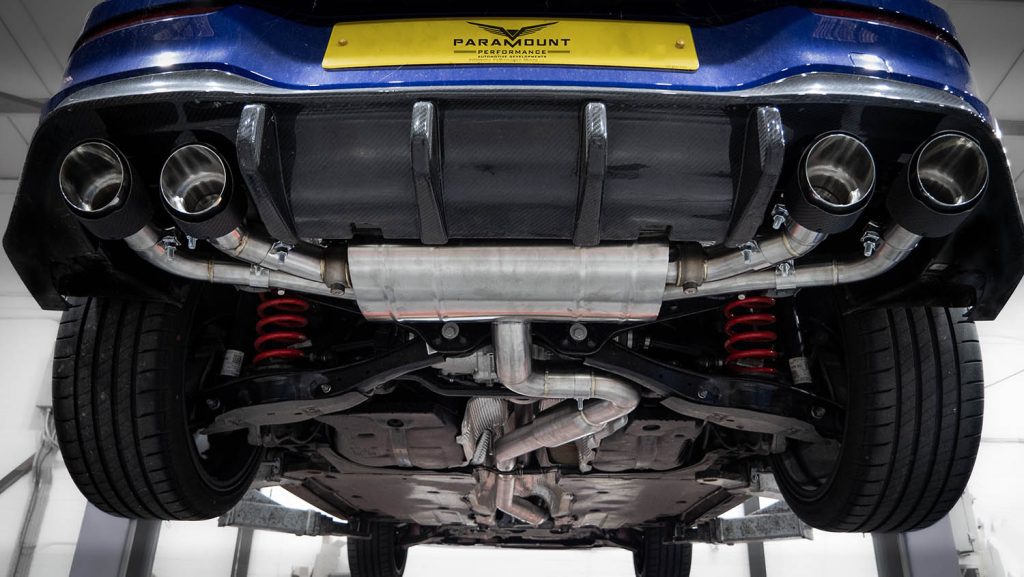
The name tells you where the system starts. “Cat back” means everything behind the catalytic converter, working towards the rear of the car. A cat back exhaust system is usually built from a handful of core parts:
- The centre or mid pipe, which connects to the rear of the catalytic converter
- One or more silencers, also called back boxes (silencer is the UK term for what some brands label a muffler)
- A resonator, a chamber that cancels out certain sound frequencies for a cleaner note
- The tailpipe and exhaust tips you see at the rear of the car
Everything in front of the cat, including the manifold, downpipe and the catalytic converter itself, stays exactly as the manufacturer fitted it.
How A Cat Back Exhaust System Works
Your engine needs to breathe out as efficiently as it breathes in. Every combustion cycle produces waste gas that has to leave the cylinders quickly so fresh air and fuel can take its place. The easier that waste gas can escape, the better the engine can perform.
Factory exhausts are built to a budget and tuned for quietness and comfort, so they tend to use narrow pipes, tight bends and large restrictive silencers. A well designed cat back system reduces those restrictions with larger diameter pipework, smoother bends and less restrictive silencers, which lowers backpressure and improves exhaust flow. You can see the full range of performance exhaust systems built around these principles.
Cat Back Exhaust vs Full Exhaust
The difference between a cat back exhaust vs full exhaust comes down to how much of the system you replace.
A cat back system replaces everything behind the catalytic converter. A full system, sometimes called a turbo back system on turbocharged cars, also replaces the parts in front of the cat such as the downpipe, and in some cases the cat section itself. There is also the axle back system, which only swaps the components from the rear axle backwards, so it is shorter and cheaper than a cat back but changes less.
The important point for UK drivers is the cat. Any full or turbo back setup that removes or replaces the catalytic converter with a de-cat or sports cat pipe is for motorsport and off-road use only. A cat back keeps your emissions equipment in place, which is why it is the road legal route to a freer flowing exhaust. For cars where an off-the-shelf system does not exist, a custom-built exhaust can be fabricated to fit.
Does A Cat Back Exhaust Add Power?
A cat back exhaust can add power, but it is sensible to keep expectations realistic. On its own it usually delivers a modest gain because the biggest restrictions in a standard system sit further forward. Across the wider industry, a quality cat back system is generally quoted as adding a small single-digit percentage to power and torque on its own, with turbocharged cars tending to see more than naturally aspirated ones.
The bigger gains come when the exhaust is part of a wider package. Combine it with an ECU remap and the engine’s fueling and timing can be optimised to make the most of the improved flow. Adding performance air filters on the intake side helps the engine breathe better at both ends.
How A Cat Back Exhaust Changes Your Sound
For many drivers, sound is the main reason to upgrade. A cat back system lets you choose the character you want.
Resonated systems use resonators to cancel specific frequencies, giving a more refined and quieter note that is easier to live with on long motorway drives. Non-resonated systems are louder and rawer. If you want both, Valvetronic technology uses valves in the exhaust that open and close, letting you switch between a subtle tone and an aggressive one at the push of a button or a remote.
Materials And Build Quality
Standard exhausts are usually made from mild steel, which is cheap but rusts over time, especially with road salt and damp underneath the car. A performance cat back system is typically made from high grade T304 or T308 stainless steel, with titanium available on some systems for a lighter weight and a sharper tone.
Stainless steel resists corrosion and, in most cases, will outlast the rest of the car, which is why many owners treat a quality exhaust as a long term investment. This same focus on materials runs through the classic car exhaust systems built for older vehicles, where the right metal and the right sound matter just as much as fit.
Is A Cat Back Exhaust Legal In The UK?
For the most part, yes. Because a cat back exhaust leaves the catalytic converter in place, it does not interfere with your car’s emissions, so a well made system from a reputable supplier is road legal.
There are two things to keep in mind. First, the exhaust must not be too loud. The MOT test includes a check that the exhaust is not unreasonably louder than a standard system in average condition, as set out in the government’s MOT inspection manual. Wider guidance points to the Road Vehicles (Construction and Use) Regulations 1986, which make it an offence to modify an exhaust so the car is louder than it was at type approval, with noise limits for newer cars commonly cited at around 72 to 74 decibels. Track-only or race systems marked “not for road use” can fall foul of this and are sold for off-road use only.
Second, you must tell your insurer about the modification. A cat back exhaust is a declarable change, and failing to declare it can invalidate your cover. Systems that remove the cat or DPF, along with pop and bang style tuning, are for motorsport and off-road use only and will fail an MOT.
Is A Cat Back Exhaust Worth It?
Whether a cat back exhaust is worth it depends on what you want from your car. If your priority is a better sound, a more attractive look and a system that will not rust, a cat back is one of the most effective upgrades you can make for the money. If your only goal is maximum power, the exhaust is best seen as one part of a wider tuning package alongside a remap.
Pricing depends on your vehicle, the type of system and the material, so Paramount Performance works on a quote basis instead of fixed prices. You can compare the full Paramount Performance exhaust range and ask for a price tailored to your car.
Why Choose Paramount Performance For Your Cat Back Exhaust
Paramount Performance has been building performance exhausts since 1986 and is a division of VIEZU Technologies. The company started as a Jaguar and Land Rover specialist and has expanded to cover a full range of makes and models, so whether you drive a Jaguar, a Land Rover or something else entirely, there is a system to suit.
Exhausts are fabricated in-house in Bidford-on-Avon, with both ready-to-fit systems from leading brands such as Milltek and fully bespoke builds available. Results can be proven on an in-house 3,000bhp 4×4 rolling road, and systems are available by worldwide mail order or with professional fitting at the UK workshop. To make the most of a new exhaust, pair it with a VIEZU-approved remap, which carries an insurance-backed guarantee and a 30-day money-back guarantee on the remapping work. To talk through the right system for your car, get in touch.
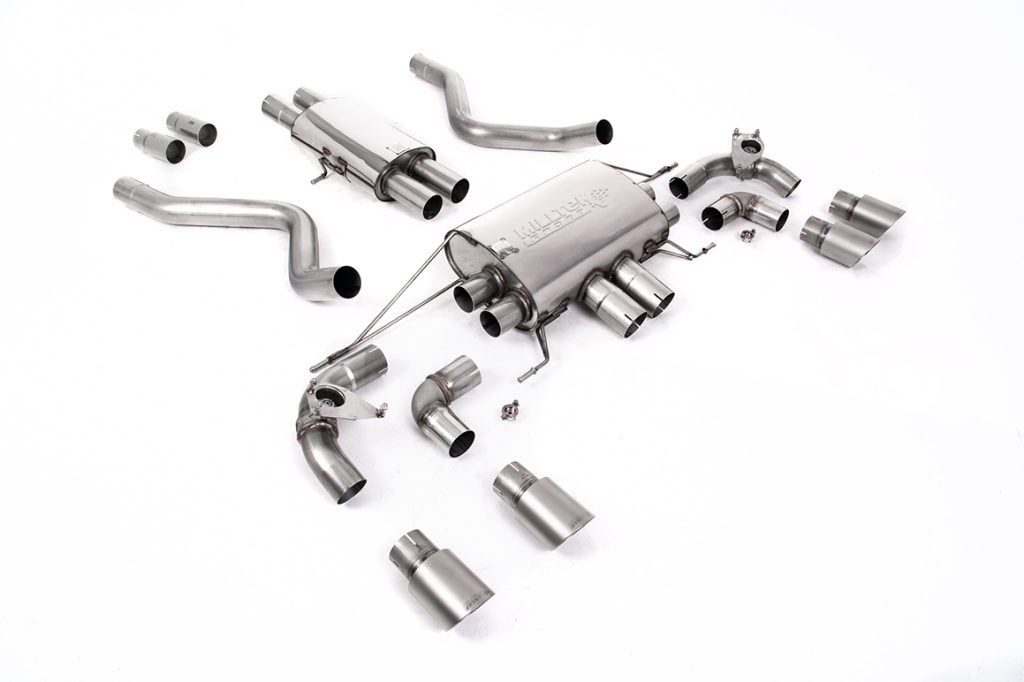
As a Milltek stockist, Paramount Performance supplies genuine Milltek cat-back systems alongside its own in-house builds, so you can choose a ready-engineered option or a fully bespoke system from the same supplier. Read the Ultimate Guide To Milltek Exhausts to learn more or shop Milltek exhausts.
Paramount Performance is also a Supersprint stockist, for drivers who prefer that brand’s tuning and sound characteristics.
About The Author
This article was written by Paul Busby, who leads VIEZU Technologies, the parent company of Paramount Performance. Paul has spent his career in vehicle tuning and performance, working across exhaust development and ECU remapping for everything from classic cars to modern performance models, which gives him first-hand insight into how a cat back system fits into a wider tuning package.
Cat Back Exhaust System FAQs
What does a cat back exhaust do?
A cat back exhaust replaces the pipework, silencer and tailpipe behind the catalytic converter to improve exhaust flow. This sharpens the car’s sound, can free up a small amount of power and torque and updates the look of the rear end, all while keeping the emissions equipment in place.
Is a cat back exhaust illegal in the UK?
A cat back exhaust is legal in the UK in most cases, because it leaves the catalytic converter and emissions equipment untouched. It must stay within the noise limits checked at the MOT, and you need to declare the modification to your insurer. Race or off-road systems that are too loud, or any setup that removes the cat, are not road legal.
Will a cat back exhaust pass its MOT?
A cat back exhaust will pass its MOT as long as it is fitted securely, has no leaks and is not unreasonably louder than a standard system. Because the catalytic converter stays in place, the car’s emissions are unaffected. Track-only systems marked “not for road use” can fail on noise.
How much does a cat back exhaust system cost?
The cost of a cat back exhaust system varies by vehicle, system type and material. As a broad market guide, prices typically range from a few hundred pounds for a direct-fit bolt-on system to over a thousand pounds for a bespoke or titanium build, before fitting. Because Paramount Performance prices each job to the vehicle, the best way to get an accurate figure is to request a quote.
How long does a cat back exhaust last?
A cat back exhaust made from stainless steel or titanium will usually last well beyond the lifetime of the car, because these materials resist the rust and corrosion that cause standard mild steel exhausts to fail. A quality system is one of the longer lasting upgrades you can fit.
How much does it cost to fit a cat back exhaust?
Fitting cost for a cat back exhaust depends on the vehicle and the system. Direct-fit bolt-on systems are designed to install in place of the standard exhaust, while bespoke systems are fabricated and fitted in-house. Paramount Performance offers professional fitting at its UK workshop or worldwide mail order if you prefer to use a local installer, and fitting can be included in your quote.
What are the downsides of a cat-back exhaust?
Some of the downsides of having a cat-back exhaust are:
– A cat-back exhaust only replaces the section behind the catalytic converter, so it won’t have the full effect that having a full or turbo-back system would have.
– This isn’t the case for everyone, but some people can find a louder, non-resonated exhaust system too much on long motorway runs.
– Any changes to your vehicle require you to inform your insurance.
None of these downsides for many people outweigh the benefits of the difference a new cat back exhaust system can have to their car.
How much HP does a cat-back exhaust add?
If you’re looking for HP gains then it’s important that you don’t rely solely on upgrading your cat back exhaust system, though you can sometimes see a 10-15 bhp improvement. The bigger, more reliable gains come from pairing the exhaust with an ECU remap, which lets the engine’s fueling and timing be optimised to make full use of the improved flow.